
Conditions
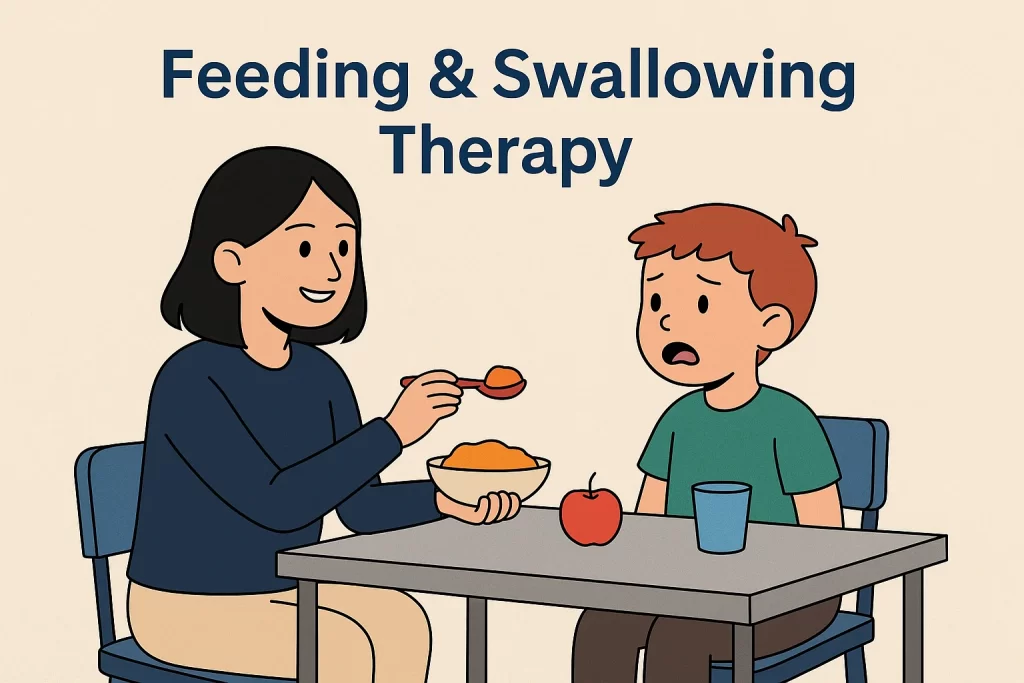
Pediatric feeding difficulties (picky eating, oral sensory issues)
Dysphagia post-stroke or neurological conditions

Cerebral Palsy, Down Syndrome with feeding/swallowing challenges
Infants with tongue-tie, cleft lip/palate, or poor suck-swallow coordination
Why Speech Therapy is Important
Feeding and swallowing are vital for nutrition, growth, and health. Untreated issues can lead
to aspiration, malnutrition, or developmental delays.
Role of Speech Therapy
Improves oral-motor strength and coordination
Trains children for safe swallowing and age-appropriate eating patterns
Guides families in texture modifications and safe feeding practices
Our Team Supports Through
Tools like chewy tubes, Z-vibe, adaptive spoons
Oral sensory-motor therapy and positioning strategies
Dysphagia rehabilitation techniques for adults and geriatrics
Benefits
- Safer mealtimes, improved nutrition, reduced caregiver stress
- Development of healthy feeding habits from infancy onward
Our Speech Therapy team brings international training, advanced tools, and a familycentered approach, ensuring every individual achieves confident communication and lasting outcomes.