
Author: Dr. Monika (HOD, Occupational Therapy) | 28th August 2025

A Lifetime Bond
The bond between siblings is often considered one of the strongest, sometimes as powerful as that between a parent and child. When this bond is shared between a brother and sister, it takes on an even more special meaning. The moment when a brother pledges to protect his sister for life, and the sister seals that promise by tying a sacred thread (rakhi) on his wrist, is one of the most emotional moments parents witness year after year.
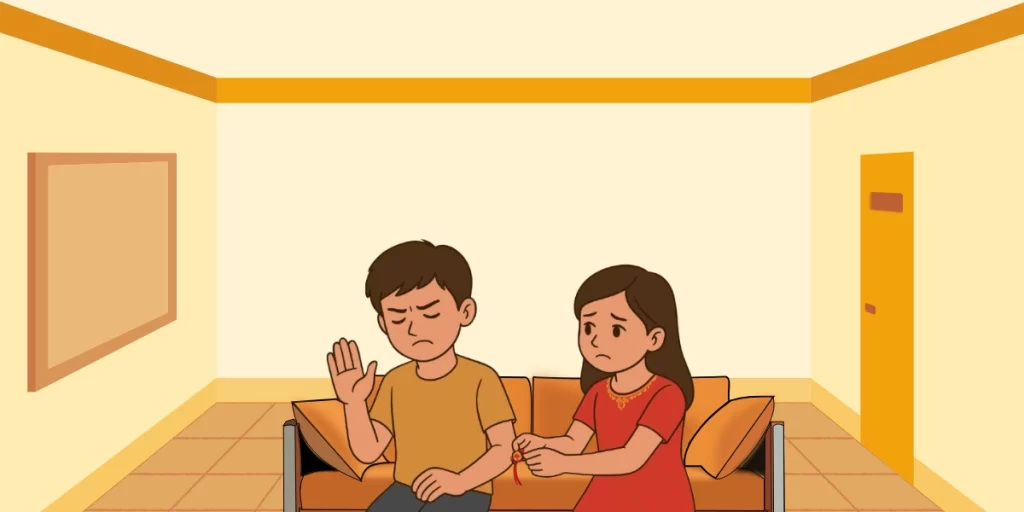
But what happens when a brother refuses to let his sister tie the rakhi, running away or having a meltdown? You cannot perhaps believe it. Yes, it does happen. As a professional who has worked with children with special needs for years, I can tell you that such moments can be heartbreaking for the sister and deeply emotional for the parents. After all, we Indians are known to be highly emotional, especially when it comes to festivals and traditions.
A Cause for Concern
The incidence of developmental disabilities among children is rising, and scenarios like the one described above are becoming more common. Why? Because many children have sensory issues that often go unnoticed or undiagnosed until they significantly affect day-to-day life.
Our brain controls everything including our emotions. When we hear, see, smell, touch, or taste something, signals are sent to the brain. These sensory inputs are connected like a multipurpose extension board, with incoming wires, multiple plug points, and outgoing connections. If too many inputs arrive at once or one socket isn’t working properly it can cause a “short circuit.” That is exactly what happens when a sensory system doesn’t receive, process, or deliver information correctly.
So, when a child refuses to wear a rakhi, it’s not about rejecting the sister or the ritual itself, it’s about rejecting the unfamiliar, bracelet-like object. Such children may also struggle with wearing new clothes, getting haircuts, walking on grass, using paints or glue, or even being hugged or kissed. Their discomfort is far greater than we can usually imagine.
The rituals of Raksha Bandhan performing arti, applying a teeka, tying the rakhi, and offering sweets can all be overwhelming for a child with sensory sensitivities. Standing still during arti, hearing the ringing bell, looking at the flame, tolerating the texture of the teeka with rice, or eating sweets they dislike – all these experiences can trigger distress. Even something as small as the heat in a room, where the fan has been switched off to protect the diya’s flame, can add to the child’s discomfort.
Unfortunately, parents often face criticism from relatives or “well-wishers,” who may dismiss the child’s behaviour as drama, mischief, or even label it as a bad omen (ashubh).
A Wake-Up Call
If your child reacts adversely, don’t rush to reprimand him. Instead, try to understand the cause. If it happens only once, you’ll know it’s just a one-off moment (parents always know); but if you see a recurring pattern, it’s time to take action.
The Way Forward
Seek help from a professional, such as an Occupational Therapist, trained in identifying and managing sensory issues. One effective approach for all parents (not just those of children with special needs) is to anticipate events and prepare children in advance.
This can be done by:
- Sharing stories about the festival.
- Looking through old family photographs.
- Visiting the market together to experience the festive atmosphere.
- Role-playing the rituals with siblings before the big day.
Introduce each step gradually. Allow your child to touch the rakhi and related materials. If he’s uncomfortable, try making a rakhi with more tolerable textures. Use turmeric instead of kumkum for the teeka to avoid allergies. Reduce puja sounds to a comfortable level. For sweets, offer small alternatives like jaggery, honey, or even a raisin.
It’s okay if Raksha Bandhan is celebrated a little differently. The true essence lies in love, protection, and care – not in rigid rituals. With patience and time, children usually adapt, and one day… it will all become manageable.
When the Sister Has Sensory Issues
Of course, sensory sensitivities are not limited to brothers. If your daughter or sister struggles with them, the same approach applies with slight modifications.
The message is clear: festivals should bring joy, not stress. By being sensitive and adapting traditions, we can ensure Raksha Bandhan remains a celebration of love, comfort, and togetherness for every child.