
Author: Jhilmil Rathore (Student Volunteer) | 2nd May, 2026

On the surface, working with athletes at Special Olympics Bharat looked like what I expected—training sessions, team activities, structured routines. But somewhere in between all of that, something much quieter and more uncomfortable started to unfold.
I began noticing how quickly we decide things for others.
Not in obvious, harsh ways. In small, everyday moments.
“Let me just do this, it’ll be easier.”
“This might be too much, let’s keep it simple.”
“They’ll need help with this.”
It never sounded wrong when we said it. In fact, it often came from a place of care. But over time, I started seeing a pattern—one where we were constantly stepping in before they even had a chance to step up.
And I realised I was doing it too.
The Moment It Clicked
There wasn’t one big turning point. It was a series of small moments that slowly built up.
Like when we were assigning roles for an activity. Without even thinking, we gave the athletes tasks that felt “manageable”—things we assumed they would be comfortable doing. Meanwhile, the planning, organising, and decision-making stayed with us.
It felt efficient. It felt structured.
But it also felt… unfair.
Because we never really asked them what they wanted to do. We didn’t pause to see if they could take on more. We had already decided their limits before they could show us anything.
And the strange part? They didn’t push back. Not because they didn’t have opinions, but because they were so used to being told what to do.
That hit harder than I expected.
What Happens When You Step Back
There were moments when, either intentionally or by accident, we stepped back a little.
We didn’t over-explain.
We didn’t jump in immediately.
We let things take their own pace.
And that’s when everything changed.
Athletes who were usually quiet started speaking up—hesitantly at first, then with more confidence. Some took charge of tasks in ways we hadn’t expected. Others made decisions that were different from what we would have done—but not wrong, just different.
It made me realise something important:
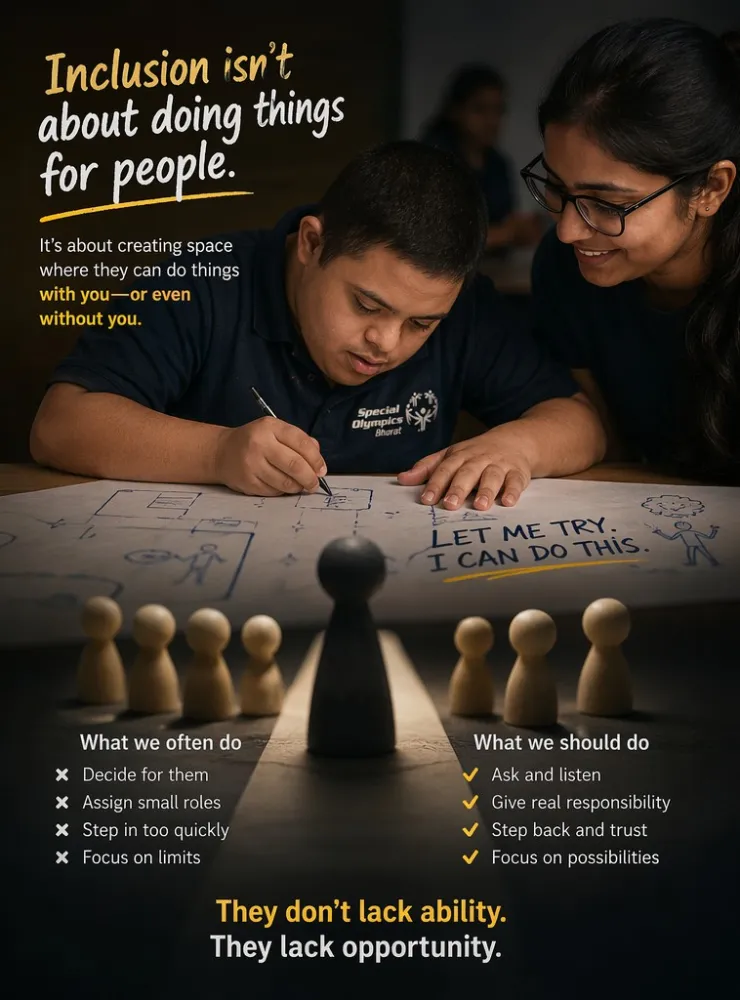
They didn’t lack ability. They lacked opportunity.
We had been so focused on supporting them that we forgot to trust them.
The Problem with “Small Roles”
In a lot of spaces, inclusion looks like giving someone a role—any role—so they can be part of the group.
But I started questioning that.
What kind of roles are we giving?
Are they meaningful?
Do they come with responsibility?
Or are they just there so we can say, “they’re included”?
Because there’s a difference between being present and being valued.
If someone is always given the simplest task, always guided, always supervised, they never really get to experience ownership. And without ownership, there’s no real confidence.
I saw how capable these athletes were—not just in completing tasks, but in taking responsibility, making choices, and even leading in their own ways.
But those moments only came when we allowed them to.
Their Way of Seeing the World
One of the most unexpected parts of this experience was how differently they approached life.
They didn’t overthink every step.
They didn’t hold back because something might go wrong.
They didn’t carry the same constant pressure to “get it right.”
They just… showed up.
Fully. Honestly. Without overcomplicating things.
And there was something incredibly grounding about that.
While many of us hesitate, analyse, and sometimes avoid things out of fear of failure, they moved forward anyway. Not because things were easy for them—but because they weren’t constantly questioning whether they should try.
It made me reflect on how much we limit ourselves too.
Unlearning Isn’t Easy
This experience wasn’t just about seeing things differently—it was about catching myself in real time.
Noticing when I was about to step in too quickly.
When I assumed someone needed help without asking.
When I chose efficiency over giving someone space to figure things out.
And honestly, it’s uncomfortable.
Because these habits feel normal. They feel helpful.
But once you see them clearly, you can’t ignore them.
What I’m Taking Forward
If there’s one thing I’m carrying with me from this experience, it’s this:
Inclusion is not about doing things for people. It’s about creating space where they can do things with you—or even without you.
It means:
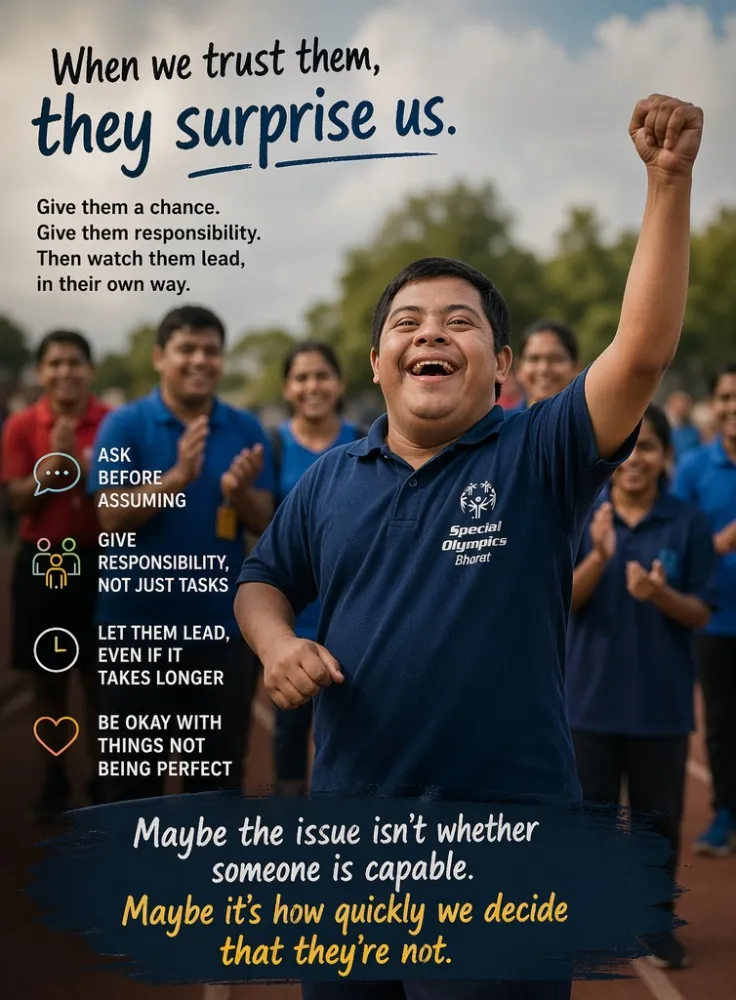
- Asking before assuming
- Giving responsibility, not just tasks
- Letting people take the lead, even if it takes longer
- Being okay with things not being perfect
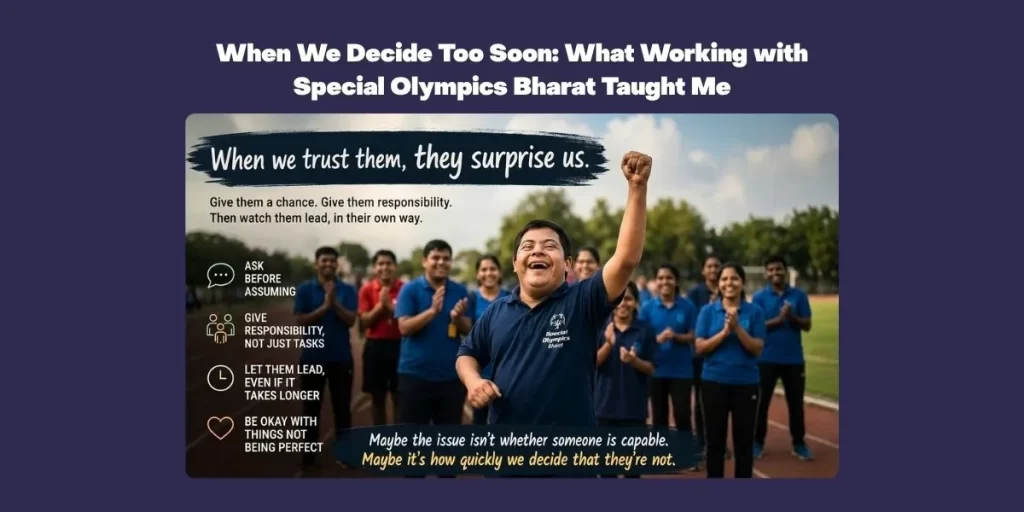
Most importantly, it means trusting people enough to let them surprise you.
A Question That Stays
Working with these athletes didn’t just change how I see them—it changed how I see all of us.
Because maybe the issue isn’t whether someone is capable.
Maybe the issue is how quickly we decide that they’re not.
And how often we don’t give them the chance to prove us wrong.