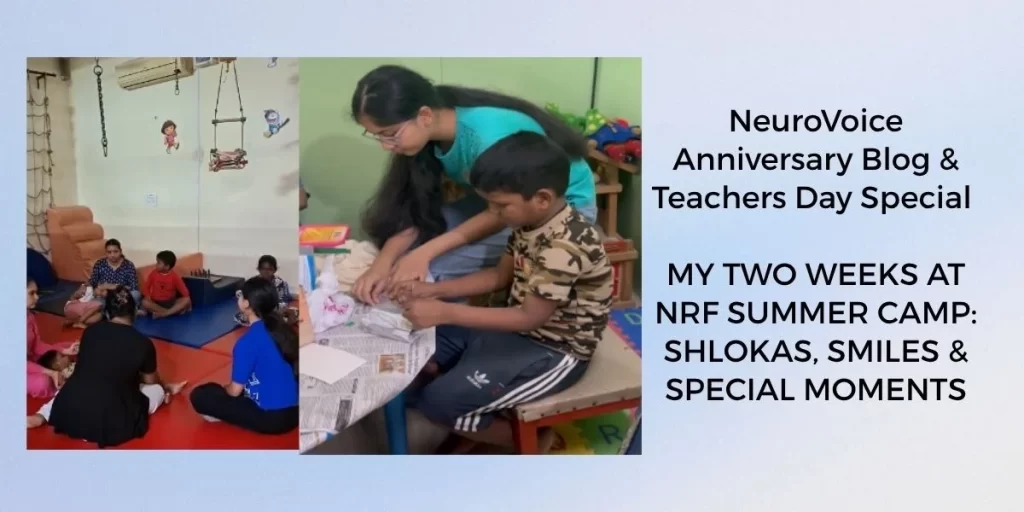
Author: Ms Saisha Kundu, Class 9 student, KR Mangalam World School, GK2 | 5th September, 2026

My school holidays had just started when we received a school circular announcing that all students were required to participate in the SEWA program (Social Empowerment through Work Education) and officially log their community service hours. Looking for a meaningful opportunity, I chose to volunteer for two weeks at The Neuroaid and Research Foundation (NRF) summer camp. I felt a surge of excitement at the prospect of working closely with children who have special needs, yet the choice also brought back memories of an earlier visit to Neuroaid Rehab in Vasant Kunj. During that first experience, I had felt uncomfortable and emotionally distant—feelings that ultimately held me back from sitting down or interacting with the children.
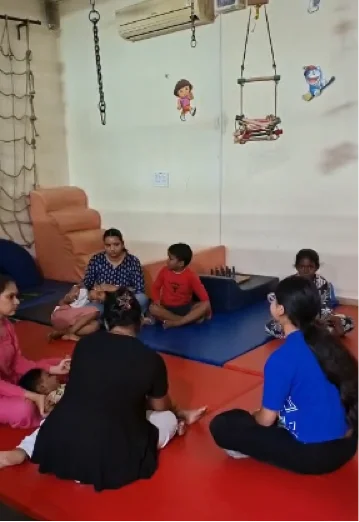
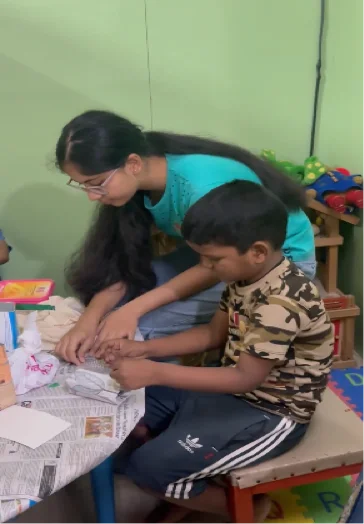
This summer, however, something fundamental changed within me. The initial hesitation completely dissolved, replaced by a deep sense of comfort and connection. Instead of stepping back, I stepped forward. I began initiating activities, offering hands-on assistance to the children, and actively supporting the therapists in managing the daily sessions. I sat side-by-side with the children, reciting calming shlokas to help them relax, and shared genuine moments of laughter with them. This fortnight at NRF transformed my perspective, turning a school requirement into a deeply rewarding journey of empathy and personal growth.
Finding Our Shared Humanity
One evening, shortly after my two-week summer camp ended, I was in the car with my mother discussing my experience. As I reflected on those weeks, a sudden realization hit me. I began to think about how the children behaved around me. They were incredibly comfortable in my presence—smiling, laughing, and completely relaxed. During meditation sessions, many would peacefully fall asleep in my lap. Their laughter became music to my ears, and their smiles a joy to my sight. In those moments, I felt no barrier between us. There was nothing inherently different about them.
The differences we perceive are largely constructed by society. Due to stereotypes, deep-seated myths, and word-of-mouth misconceptions, a rigid line has been drawn between “normal” individuals and children with special needs, including autism. The truth is simple: they are individuals with their own unique personalities, strengths, and challenges, just like anyone else. A person’s diverse abilities should never define their worth. Every individual deserves unconditional respect and understanding.
Society often labels these children as “incapable,” “childish,” or “strange.” But we must realize they are none of these things. They cannot be judged by outward appearance, behavior, or attitude. Once we change our perception—just as mine changed in the quiet of that car ride—we can begin to dismantle these stereotypes. That is how we build a society that is truly inclusive, accepting, and non-judgmental.
Beyond the Surface
While making videos for social media as part of my volunteering, I often found myself smiling as I watched the children laughing, giggling, and having fun. Looking at them, I would think about how incredibly capable they are and how much they can achieve in life if they are simply given the chance to be included. People will always have misconceptions about them, but those of us who know better must help build a world that is inclusive and welcoming. Right now, that is not the case. It is not just doctors or families who need to understand children with special needs; it is everyone in society.
There is still a huge gap to bridge, but volunteering at the summer camp fundamentally changed my perspective and taught me lessons I will never forget. I will always honour this experience because it did far more than just fulfil my SEWA requirement. It taught me that kindness begins with understanding, and that the greatest barrier people with special abilities face is not their condition itself, but society’s misconceptions. If each of us chooses empathy over judgement, we can help build a world where every person feels seen, valued, and included.
Volunteering with the NRF permanently altered how I view the world, teaching me to think twice before judging someone. Now, whenever friends make unkind remarks about others, I simply smile and refuse to agree. I know there is often a curtain covering what lies beneath the surface—wounds left not by physical harm, but by a lifetime of discouraging words. People frequently say hurtful things and move on, completely unaware that their words leave lasting scars, not only on individuals with special needs, but on anyone targeted by them. It is time for us to change that.